Grover Cleveland and the Same-sex Marriage Debate: State vs. Federal Power


As a historian of American politics, I am most often asked how this or that historical figure would think about modern political issues.  Many times the answer is an easy one, but others not so much.  The issue of gay marriage would certainly fall into the latter category.

So, you might ask, how would Grover Cleveland, as President of the United States, have dealt with the issue in the late 19th century?

The subject of same-sex marriage was certainly not on anyone’s lips in his day, nor can it be found in any letters or papers to my knowledge.  But we can ascertain Cleveland’s probable thoughts on the matter by understanding his political thought.  He was a steadfast Jeffersonian President who believed in the cardinal principles of that philosophy, two of which were the absolute will of the people and respect for the individual states.

As Thomas Jefferson had vowed in his first inaugural address in 1801, his administration would support “the State governments in all their rights, as the most competent administrations for our domestic concerns and the surest bulwarks against anti-republican tendencies.” President Cleveland also swore, on numerous occasions, to maintain respect for the states in their independent and sovereign character.

The state governments control the process of marriage by issuing licenses and sanctioning the procedure.  Nowhere in the US Constitution is marriage mentioned, thereby making it off limits to meddling by Washington politicians.  So for Cleveland, the question should be left up to the people of the states to decide, expressing their will at the local ballot box.

And as of this writing, the people in 32 states have voted down same-sex marriage, many of them overwhelmingly so, representing every region in the country.  Where it has been put to popular vote, not one single state has accepted it.

Mississippi had the highest vote totals against the practice, with 86 percent.  Tennessee and Alabama also had vote totals over 80 percent.  That was to be expected in the Bible Belt South.  But other reliable Republican states have also voted, unsurprisingly, to forbid it, many with totals in the 60s and 70s.

Yet what has been surprising to many is the fact that the mostly Democratic states of Colorado (56 percent), Nevada (69 percent), Wisconsin (59 percent), Michigan (59 percent), and Hawaii (69 percent), overwhelmingly rejected it.  Even California, where one would think it had a fighting chance of passage, voted it down with 52 percent of the vote.

The people of the states have spoken on this issue, and the results of their suffrage should put an end to the debate.  Grover Cleveland would have wholeheartedly agreed.

History Repeating Itself: Grover Cleveland and Modern American society


During Grover Cleveland’s eight years in the presidential chair, he confronted national problems nearly identical to those America faces today.  There are numerous issues with striking similarities, but the three major ones stand out above all others are – the economy, paternalism, and foreign affairs.

Painting of Grover Cleveland
Anders Zorn [Public domain], via Wikimedia Commons
Continue reading “History Repeating Itself: Grover Cleveland and Modern American society”

Reshaping America with Jeffersonian Values


The United States began its existence as an independent nation during a pitched battle over what direction the federal government should take and which party – the Hamiltonian Federalist or the Jeffersonian Republican – would rightly carry the banner of the American Revolution. This first ideological fight took place in President Washington’s Cabinet, which found itself torn between Secretary of the Treasury Alexander Hamilton and Secretary of State Thomas Jefferson. The philosophical clash that began in 1789 continues today.

US President Grover ClevelandHamilton’s arguments prevailed during both the Washington and Adams administrations, but Jefferson struck back with a great victory in 1800 and stopped the Federalist onslaught. The nation was governed, for the most part, by Jeffersonian principles for the next sixty years, and, despite some historians’ beliefs to the contrary, Hamilton’s entire big government program was eventually repealed.

However with Lincoln’s election in 1860 – Old Abe being from the school of Hamiltonian thought – and the secession of the Jeffersonian South, the Republican Party re-instituted all of Hamilton’s ideas – a strong central government, a national banking system, fiat currency, high tariffs and internal taxes, direct aid to corporations, loose construction of the Constitution, and suppression of civil liberties, with little opposition. Continue reading “Reshaping America with Jeffersonian Values”

We Are All Romney Men Now


The following blog post was published in the Laurel Leader Call newspaper (Laurel, MS) on April 24, 2012, a column that stresses the need for conservatives to get behind Romney as a means of replacing Obama:

With the recent withdrawal of Rick Santorum from the Republican presidential nomination race, opposition to Mitt Romney has all but evaporated.  It is inconceivable that anyone, neither Newt Gingrich nor Ron Paul, can mount the kind of resistance needed to stop the former Massachusetts governor.

So whether we like Romney or hate Romney, conservatives must rally around him in order to keep Obama out of the Oval Office for another four years.

With the nomination all but won, Mitt Romney must make take several key steps to ensure a Republican victory in November. Continue reading “We Are All Romney Men Now”

Paternalism’s Foe: Grover Cleveland


Politicians, pundits, and scholars have wrestled over a central question throughout American political and constitutional history:  What role should the government have in the lives of ordinary citizens?

For Jeffersonian Conservatives, such as Grover Cleveland, the government has no business involving itself in areas outside its limited, constitutional role, and should never take a position as a “custodian;” the people should be free to pursue their own dreams without government interference, to rise as high and as far as their God-given talent, abilities, and determination will carry them.  Success or failure depends on the individual.

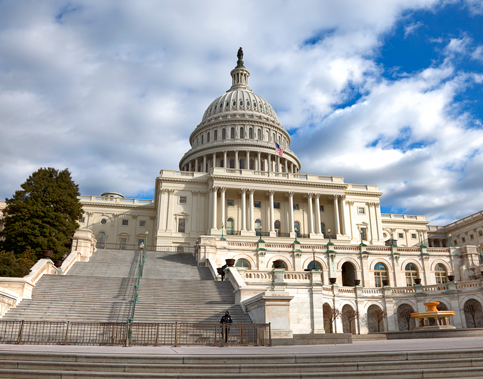
washigton dc capitol building

Some liberals on the other side of the political spectrum believe the government should play a vital role in the lives of the people, from cradle to grave. They believe the lowly masses cannot take care of themselves.  For Democrats, government must step in and take up the role of caretaker.  As Nancy Pelosi said in 2011:  “I view my work in politics as an extension of my role as a mom.”[i]  This progressive viewpoint is known as government paternalism, and has been defined as “a policy or practice of treating or governing people in a fatherly manner, especially by providing for their needs without giving them rights or responsibilities.”[ii] Continue reading “Paternalism’s Foe: Grover Cleveland”

Grover Cleveland: the Bedrock of Conservatism


Whenever friends and family find out the subject of my new book, one of the first questions I am usually asked is: “Why Grover Cleveland?” My answer: “Why not?” For Grover Cleveland, who served as both the 22nd and 24th President of the United States, was one of the greatest conservative statesmen in American history, a steadfast advocate of Jeffersonian political principles, the bedrock of conservatism. The Last Jeffersonian: Grover Cleveland and the Path to Restoring the Republic is an examination of the true nature of conservative thought, exemplified by the public life of Cleveland, and a pathway to a restoration of the republic crafted by our Founding Fathers.

During my first semester of graduate school, at the University of Southern Mississippi, I became seriously interested in Grover Cleveland and his political life after reading a less than stellar biography. As I delved deeper into his policies, I soon realized that the career of this forgotten statesman offers answers to modern America’s most pressing political issues, such as the public character and behavior of our politicians, direct governmental assistance to the people, actions during an economic depression, foreign intervention, and upholding political principles. It is only with the study of history, and the solutions Cleveland provided for us, that we can solve our problems and restore the constitutional republic. Continue reading “Grover Cleveland: the Bedrock of Conservatism”

A Strong, Conservative Leader to Restore the Republic


America is at a crossroads.  The 2012 election, as well as those in the very near future, could very well determine what kind of nation we will leave for posterity.  Yet, while on our current political trajectory, America is in danger of losing the constitutional republic created by the Founding Fathers, and once lost, it might be gone forever.

My new book, The Last Jeffersonian: Grover Cleveland and the Path to Restoring the Republic, examines the true nature of conservative thought, the present direction of the nation, and the changes we must make in order to preserve our great political heritage.  Exhibit A in achieving these three goals is a study of the public career of Grover Cleveland, who served as the 22nd and 24th President of the United States, from 1885-1889 and from 1893-1897.

As a great public servant – mayor, governor, and president – Cleveland confronted many of the same troubles we face in our time – the public character and behavior of our candidates, the role of government in the everyday lives of the people, the burden of taxation, the distribution of wealth, government involvement in an economic depression, spending, constitutional interpretation, and complex foreign affairs. Continue reading “A Strong, Conservative Leader to Restore the Republic”

The Choice: 1964 and 2012


This week President Barack Obama, in a tough bid for re-election warned the American people that the 2012 race for the White House would be the starkest since 1964.  So let us re-examine that famous presidential election in light of the campaign the Obama team has in store for presumptive GOP nominee Mitt Romney:

They said he was crazy, mad, a loose-canon, an extremist, a warmonger.  The nation was warned over and over and over again, by Democrats and their friends in the media, that if Barry Goldwater won the presidency in 1964, Armageddon might be the ultimate result.  Surely he would plunge headlong into a war in Vietnam that might bring in the Chinese or worse, the Soviets.  Social Security and any aid from Washington would be taken away.  The country would revert back to the nineteenth century, if not the eighteenth.

The only logical choice was the sitting president, Lyndon Johnson, who assumed the office tragically on November 22, 1963 when the beloved John F. Kennedy fell to an assassin’s bullet.  LBJ would carry the nation forward, not backward.  Progress would be the order of the day. Continue reading “The Choice: 1964 and 2012”

“Game Change”: Historical Revisionism At Its Finest


Last week, HBO, the home of the great intellectual Bill Maher, released its much-anticipated film about the 2008 presidential election, centered mainly on John McCain’s choice of Sarah Palin as his running mate. It became clear during the course of the film that HBO’s main mission was to smear Governor Palin, brand her a stupid woman with no business on a national ticket, and blame her for McCain’s loss to Barack Obama.

It is true, McCain did need a game-changing pick for VP. He did not excite the base and without the strong rightwing of the Republican Party, his goose was more than cooked. He desperately wanted Senator Joe Liebermann, Al Gore’s running mate in 2000, which he saw as a national unity ticket of sorts, not a terrible idea in the abstract, but it would have been a political train wreck with a conservative wing deeply suspicious of him. So he went with Palin. Continue reading ““Game Change”: Historical Revisionism At Its Finest”

Teaching Civic Virtue


Today, we have in our society a crisis.  I’m not talking about the debt crisis, though that certainly qualifies, but a crisis in our very attitudes as Americans.  We used to believe in ourselves and in our founding principles but those values have slowly eroded to the point of nonexistence.

George Washington reminded us in his famous Farewell Address in 1796 that “Of all the dispositions and habits which lead to political prosperity, religion and morality are indispensable supports.”

Washington was right but sadly, we seem to have lost the battle over our local schools, particularly the right to teach what we want, especially the Ten Commandments.  We can’t even post them in the halls without out the threat of a lawsuit and a court rebuke.  Though we can fight to win them back, the process will take years, if not decades. Continue reading “Teaching Civic Virtue”

Blog at WordPress.com.

Up ↑