Reshaping America with Jeffersonian Values


The United States began its existence as an independent nation during a pitched battle over what direction the federal government should take and which party – the Hamiltonian Federalist or the Jeffersonian Republican – would rightly carry the banner of the American Revolution. This first ideological fight took place in President Washington’s Cabinet, which found itself torn between Secretary of the Treasury Alexander Hamilton and Secretary of State Thomas Jefferson. The philosophical clash that began in 1789 continues today.

US President Grover ClevelandHamilton’s arguments prevailed during both the Washington and Adams administrations, but Jefferson struck back with a great victory in 1800 and stopped the Federalist onslaught. The nation was governed, for the most part, by Jeffersonian principles for the next sixty years, and, despite some historians’ beliefs to the contrary, Hamilton’s entire big government program was eventually repealed.

However with Lincoln’s election in 1860 – Old Abe being from the school of Hamiltonian thought – and the secession of the Jeffersonian South, the Republican Party re-instituted all of Hamilton’s ideas – a strong central government, a national banking system, fiat currency, high tariffs and internal taxes, direct aid to corporations, loose construction of the Constitution, and suppression of civil liberties, with little opposition. Continue reading “Reshaping America with Jeffersonian Values”

Paternalism’s Foe: Grover Cleveland


Politicians, pundits, and scholars have wrestled over a central question throughout American political and constitutional history:  What role should the government have in the lives of ordinary citizens?

For Jeffersonian Conservatives, such as Grover Cleveland, the government has no business involving itself in areas outside its limited, constitutional role, and should never take a position as a “custodian;” the people should be free to pursue their own dreams without government interference, to rise as high and as far as their God-given talent, abilities, and determination will carry them.  Success or failure depends on the individual.

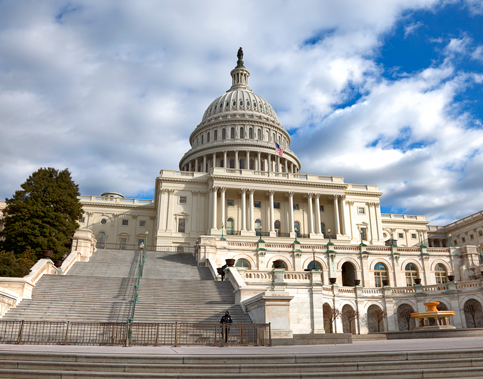
washigton dc capitol building

Some liberals on the other side of the political spectrum believe the government should play a vital role in the lives of the people, from cradle to grave. They believe the lowly masses cannot take care of themselves.  For Democrats, government must step in and take up the role of caretaker.  As Nancy Pelosi said in 2011:  “I view my work in politics as an extension of my role as a mom.”[i]  This progressive viewpoint is known as government paternalism, and has been defined as “a policy or practice of treating or governing people in a fatherly manner, especially by providing for their needs without giving them rights or responsibilities.”[ii] Continue reading “Paternalism’s Foe: Grover Cleveland”

Grover Cleveland: the Bedrock of Conservatism


Whenever friends and family find out the subject of my new book, one of the first questions I am usually asked is: “Why Grover Cleveland?” My answer: “Why not?” For Grover Cleveland, who served as both the 22nd and 24th President of the United States, was one of the greatest conservative statesmen in American history, a steadfast advocate of Jeffersonian political principles, the bedrock of conservatism. The Last Jeffersonian: Grover Cleveland and the Path to Restoring the Republic is an examination of the true nature of conservative thought, exemplified by the public life of Cleveland, and a pathway to a restoration of the republic crafted by our Founding Fathers.

During my first semester of graduate school, at the University of Southern Mississippi, I became seriously interested in Grover Cleveland and his political life after reading a less than stellar biography. As I delved deeper into his policies, I soon realized that the career of this forgotten statesman offers answers to modern America’s most pressing political issues, such as the public character and behavior of our politicians, direct governmental assistance to the people, actions during an economic depression, foreign intervention, and upholding political principles. It is only with the study of history, and the solutions Cleveland provided for us, that we can solve our problems and restore the constitutional republic. Continue reading “Grover Cleveland: the Bedrock of Conservatism”

A Strong, Conservative Leader to Restore the Republic


America is at a crossroads.  The 2012 election, as well as those in the very near future, could very well determine what kind of nation we will leave for posterity.  Yet, while on our current political trajectory, America is in danger of losing the constitutional republic created by the Founding Fathers, and once lost, it might be gone forever.

My new book, The Last Jeffersonian: Grover Cleveland and the Path to Restoring the Republic, examines the true nature of conservative thought, the present direction of the nation, and the changes we must make in order to preserve our great political heritage.  Exhibit A in achieving these three goals is a study of the public career of Grover Cleveland, who served as the 22nd and 24th President of the United States, from 1885-1889 and from 1893-1897.

As a great public servant – mayor, governor, and president – Cleveland confronted many of the same troubles we face in our time – the public character and behavior of our candidates, the role of government in the everyday lives of the people, the burden of taxation, the distribution of wealth, government involvement in an economic depression, spending, constitutional interpretation, and complex foreign affairs. Continue reading “A Strong, Conservative Leader to Restore the Republic”

The Choice: 1964 and 2012


This week President Barack Obama, in a tough bid for re-election warned the American people that the 2012 race for the White House would be the starkest since 1964.  So let us re-examine that famous presidential election in light of the campaign the Obama team has in store for presumptive GOP nominee Mitt Romney:

They said he was crazy, mad, a loose-canon, an extremist, a warmonger.  The nation was warned over and over and over again, by Democrats and their friends in the media, that if Barry Goldwater won the presidency in 1964, Armageddon might be the ultimate result.  Surely he would plunge headlong into a war in Vietnam that might bring in the Chinese or worse, the Soviets.  Social Security and any aid from Washington would be taken away.  The country would revert back to the nineteenth century, if not the eighteenth.

The only logical choice was the sitting president, Lyndon Johnson, who assumed the office tragically on November 22, 1963 when the beloved John F. Kennedy fell to an assassin’s bullet.  LBJ would carry the nation forward, not backward.  Progress would be the order of the day. Continue reading “The Choice: 1964 and 2012”

“Game Change”: Historical Revisionism At Its Finest


Last week, HBO, the home of the great intellectual Bill Maher, released its much-anticipated film about the 2008 presidential election, centered mainly on John McCain’s choice of Sarah Palin as his running mate. It became clear during the course of the film that HBO’s main mission was to smear Governor Palin, brand her a stupid woman with no business on a national ticket, and blame her for McCain’s loss to Barack Obama.

It is true, McCain did need a game-changing pick for VP. He did not excite the base and without the strong rightwing of the Republican Party, his goose was more than cooked. He desperately wanted Senator Joe Liebermann, Al Gore’s running mate in 2000, which he saw as a national unity ticket of sorts, not a terrible idea in the abstract, but it would have been a political train wreck with a conservative wing deeply suspicious of him. So he went with Palin. Continue reading ““Game Change”: Historical Revisionism At Its Finest”

The Evolving View of Government


“The lesson should constantly be enforced,” wrote President Grover Cleveland in 1887, “that though the people support the Government the Government should not support the people.”

Cleveland made this pronouncement as he vetoed the Texas Seed Bill, a small $10,000 appropriation aimed at providing assistance to drought-stricken farmers in the Lone Star State.

The Constitution did not allow the federal government to spend money on public charity, the Jeffersonian Cleveland believed, and if Washington started down the road of paternalism, where would it end?

Such strict construction of the Constitution, a source of pride for true conservatives, drives leftwing scholars and pundits crazy, causing them to denigrate any President who had the temerity to believe in such “outdated” and “old fashioned” thinking.

For Jack Beatty, a senior editor of The Atlantic Monthly, an analyst on NPR, and author of The Age of Betrayal:  The Triumph of Money in America, 1865-1900, such views raise important questions:

“Why did the people support a government that on principle refused to support them, that wouldn’t spend pennies to save farmers from ruin?” he asked.  “Why return to office politicians like Cleveland, who vetoed three times as many bills in one term as all his predecessors combined?  What had gone wrong with the Republican experiment in positive government for the country to settle for negative government?”

Beatty believes, not in the conservative principles of Thomas Jefferson, but those of the more liberal Abraham Lincoln, a philosophy that is an antithesis to Cleveland’s.  Lincoln had broken the old Jeffersonian mold and provided a new view of the role of government in the every day lives of the people.  He once said, “The legitimate object of government is to do for a community of people, whatever they need to have done, but can not do, at all, or can not so well do, for themselves – in their separate, and individual capacities.”

Which begs another question:  Who decides what the people can or cannot do for themselves?  Or if they can do it good enough to suit the government?

Ultimately the people rejected the Lincoln line of thinking in favor of conservatism, at least for a while.  Nineteenth century Americans, and their early 20th century brethren, did not believe in an active, or positive, government.  The American Revolution, contrary to Beatty’s thinking, was not about creating an energetic government.  Our forebears held true to the Jeffersonian admonition, “That government is best which governs least.”

The Jeffersonian view carried over into the early 20th century.

In 1927, the Mississippi River overflowed its banks in one of the worst floods in the nation’s history.  Herbert Hoover, a great engineer and Commerce Secretary under President Calvin Coolidge, traveled to the South to offer his assistance.  But unlike the situation in New Orleans eight decades later with Hurricane Katrina, local people told Hoover to leave.  They did not trust the federal government and did not want out-of-town bureaucrats sticking their noses in local affairs.

People in those days had honor and pride, believing they could handle their own problems.  There were no shouts of “help” from stranded citizens who suffered from the severe flooding, as we saw around the Superdome.  They understood that with government aid also came government rules, regulation, oversight, and control.  Once the government got in, it might be next to impossible to get them out.

It was not until the horrible period of the Great Depression in the 1930s, when the economy nearly imploded, that Americans, for the first time, began to look to government for every day things.  FDR used massive government aid to help people affected by the depression, the first direct assistance in U.S. history.

From that point on, a dependence on government grew within the American people and has continued to increase.

Americans have evolved from a freedom-loving people that looked to themselves for their own livelihood to believing that government has a positive role to play in society.

The Constitution, earlier Americans correctly understood, does not contain any language that allows the government to spend money for public assistance.  It was always held to be unconstitutional to tax one group of citizens and give it to another.

But all that has changed now and the situation is much worse.  It has recently been reported that government handouts equal 35 percent of all wages in the United States.  In 1960 the figure was just 10 percent.  Forty-four million Americans are now on food stamps and fifty million receive Medicaid.  Today, fifty-eight percent of all government spending is on entitlement programs.

But what is even scarier is that it seems as if a majority of Americans believe the federal government should have at least some positive role in the lives of the people.  Many believe the government should take care of its citizens from cradle to grave.  Early Americans would have thought such thinking downright dangerous.

President Cleveland, in the late 19th century, could foresee a potential threat to limited government if Washington got in the handout business.  He took the opportunity in his second inaugural address to remind the people that the “lessons of paternalism ought to be unlearned,” he said.  “Every thoughtful American must realize the importance of checking at its beginning any tendency in public or private station to regard frugality and economy as virtues which we may safely outgrow. The toleration of this idea results in the waste of the people’s money by their chosen servants and encourages prodigality and extravagance in the home life of our countrymen.”

In our time of near-bankruptcy, America would do well to elect a president in the mold of Cleveland, one who will stop the wealth re-distribution scheme in full swing in Washington and return our nation to the ideals and values that made it great.


Tales From The Liberal Playbook


From studying American political history, it seems as if liberals have a secret playbook and have been using it from the early days of the Republic, handing it down to each succeeding generation.

Liberals seem to know exactly what to do when any situation arises and history is full of interesting parallels.

1.  Use the Cover of a Crisis to Implement Your Agenda and Smash Your Political Enemies.

America’s first political party, the Federalists, the Party of George Washington, Alexander Hamilton, and John Adams, led the nation from 1789 to 1801, a period of twelve years that included control of the presidency and both houses of Congress.

The liberal party of its day, Federalist lawmakers imposed a wide variety of direct taxes upon the people, centralized the banking system, and ran rough shod over the new Bill of Rights with their crown jewel – the Alien and Sedition Acts of 1798.

With a quasi-war brewing with France, and with the hysteria it was causing, these acts were supposedly enacted to help secure and protect the homeland.  But the left has long used deceit to hide their true intentions, particularly during a crisis.  The real target was Thomas Jefferson’s Republican opposition.

The Alien and Sedition Acts consisted of four bills, three of which were specifically designed to weaken the Jeffersonians.

The Naturalization Act raised the period of residence required for citizenship from five years to fourteen years.  The reason for this was quite simple – a majority of new immigrants from Europe were joining the Republicans.

The Alien Act authorized the president to summarily deport any aliens, regardless of country, that he deemed dangerous “to the peace and safety” of the United States.  Under the act, aliens would not receive a jury trial and the president was not required to explain or justify his decision.  Jefferson considered the bill “worthy of the eighth or ninth century.”  Like the Naturalization Act, the Alien Act was one of pure political partisanship.

The most controversial was the Sedition Act.  It provided fines of up to $2,000 and jail sentences of up to two years for anyone who publicly criticized the president, members of Congress, or other administration officials, by publishing “false, scandalous and malicious” accusations.  It was a clear violation of freedom of speech and freedom of the press, taking aim at Republican newspapers, which were springing up all over the nation.

After the Senate passed the Sedition Act, ironically on July 4, 1798, Federalist leaders toasted the president:  “John Adams.  May he, like Samson, slay thousands of Frenchmen with the jawbone of Jefferson.”

Under this act, a number of Jeffersonian newspaper editors were charged with sedition, and those brought to trial were convicted, fined, and sent to prison.

Congress also established sunset provisions for most of these new laws, allowing them to expire just after the 1800 elections when Adams would have secured a second term.  If Federalists retained power, those laws would no longer be necessary.  This shows the level of politics attached to the new acts.

But despite administration efforts to maintain power, the people rose up against what Jefferson called “a reign of witches,” and ousted the Federalist Party from the White House and both Houses of Congress.  The party never again held power.

FDR used the Great Depression to “reform” capitalism with a litany of new government programs and newly discovered powers.  The social welfare state we now live in was born in the 1930s.

And as we well recall, Obama’s former chief of staff, now Mayor of Chicago, Rahm Emanuel, famously said during the economic panic, “Never let a serious crisis go to waste.”  This is liberal thinking in its finest.  They simply cannot express what they really want to do so they use a crisis as a way to pass laws they know the people will not support, like massive bank bailouts, stimulus spending packages, and financial regulatory bills to take more control over the nation’s economy.

But we must always remember what James Madison once said, “Crisis is the rallying cry of the tyrant.”

2.  When You Can’t Legislate Your Agenda, Use the Judiciary to Impose It.

Though the Federalists were routed in the 1800 elections, they were not down and out, but had one last trick up their sleeve – impose their agenda by judicial fiat, which is why liberals insist on a strong court system.

To keep Federalist policies in place, President Adams, in his last days in the White House, appointed a wealth of Federalist judges in the many new courts the out-going Federalist-controlled Congress hastily created.  They became known as Adams’ “midnight judges,” most of whom were named during the last night he resided in the Executive Mansion.

Adams also appointed John Marshall to the Chief Justiceship of the Supreme Court, a fierce proponent of nationalism.  Marshall used judicial power to solidify the Federalist agenda of centralizing power in Washington.  He never found a federal right he did not like.

Jefferson and Republicans in Congress fought hard to undue the Federalist-dominated judiciary with some success, but were unable to overturn it completely.

And for that, we have been living with a left-of-center judiciary nearly every step of the way.  The courts have imposed abortion rights, stripped prayer from schools, expanded eminent domain, limited property rights, interfered in state affairs, and generally caused mayhem, all in the name of liberalism.

3.  Smear, Slander, and Shame Your Enemies, Especially to Guard the All Important Supreme Court.

When it comes to conservative judges, especially for justices of the Supreme Court, liberals have vilified them in vicious personal attacks and smear campaigns in the hopes of protecting the one branch of government not subject to popular sovereignty.  By keeping the Court left of center, liberals can write laws from the bench and implement their unpopular policy goals with no opposition.

But to do that they must maintain control of the court system, especially the High Court, at all costs.

In 1888, in an effort to help end sectional tensions, President Grover Cleveland appointed Lucius Quintus Cincinnatus Lamar of Mississippi to an associate position on the United States Supreme Court.

Congressional liberals, mainly from the North, attacked Lamar, not as a Southerner, which they hated, but as “unqualified” to sit on the High Court.  One Massachusetts Senator opposed Lamar “not because I doubted his eminent integrity and ability, but because I thought that he had little professional experience and no judicial experience.”

The San Francisco Chronicle believed Lamar leaned “naturally and spontaneously to the side of the strong against the weak.  He is a friend of monopolies.”

The name Bork, Scalia, Thomas, Roberts, or Alito could have been substituted for Lamar with little difference.  The attacks against conservative nominees to the Court have been nothing short of vicious.  And the left says it’s the right that is “mean spirited.”

4.  Use Deceit to Mask Your Real Intentions.

Liberals have always been disingenuous about their real goals.

In the 1890s, the left sought to implement an inflationary monetary policy based on the free and unlimited coinage of silver.  The nation was on the gold standard, but liberals wanted to inflate the currency supply with cheaper paper money and silver coins.  They claimed to want a system of bi-metallism, allowing both gold and silver to circulate, but in reality sought to replace gold, the money of the bankers they claimed, with silver, money for the poor.

Inflation, they contended, would help the poor, especially the nation’s farmers, who were in perpetual debt.  Inflating the currency with cheaper dollars would make it easier to pay those debts.

But Gresham’s Law states that “bad money drives good money out of circulation.”  This economic rule would allow the left to get what it wanted without actually having to legislate it.

They could not advocate a silver standard, so they sought a sneaky way to implement it.  If enough silver entered circulation, Gresham’s Law would kick in, eventually driving out gold, because people would hoard it, and the nation would be placed on a silver standard.

The plan failed, however, because the people did not want it and the gold standard was saved at the ballot box by electing a string of gold standard presidents.

Does this tactic sound familiar?

The Obama-Reid-Pelosi Administration did exactly the same thing with the 2010 Health Care Bill.  They wanted a “single payer” government run system but could not get it passed, so they instituted a “public option” in the name of “competition.”

But no private insurance company can ever hope to compete with the government, which does not have to worry about making a profit and can always draw from the public trough to make up any shortfalls.

Knowing full well that any government system would spike health insurance costs, Democrats hope that businesses will be forced, out of necessity, to drop their increasingly expensive private plans in favor of the cheaper public option, eventually placing the country under a “single payer” health care system.

Liberal Democrats claim they are against monopolies and the big insurance companies, which are supposedly in the pockets of the Republicans.  But it was conservatives who sought to end the state monopolies for health insurance companies, forcing them to compete nation-wide, a move that would dramatically lower the cost of premiums.  The left, as well as the insurance companies, have fought this idea tooth and nail.

So who really favors monopolies and the insurance companies?

5.  When All Else Fails, Use Class Warfare and Denigrate the Rich.

Democrats used a similar strategy of deceit to kill the flat tax proposal but eventually pulled out one of their oldest cards to finish it off – the Class Card.

The federal tax code is so dense and cumbersome that members of the House Ways and Means Committee do not even understand it, nor does the IRS.

One conservative plan is the flat tax, which would abolish the entire code and implement one flat rate for everyone.  Gone would be the thick and burdensome forms, to be replaced by a simple index card, whether for a business or an individual.  Wherever this plan has been enacted, the economy has soared.

Democrats immediately pounced on the idea as a sop to the rich.  But is it?

The plan gives generous personal exemptions for families and children.  For instance, under one proposal each adult would get a personal tax exemption of $17,500 and $5,000 per child.  The tax rate would be 17 percent.

So let’s look at two families, each with two parents and two children.

Family A makes $50,000 a year.  The exemptions would total $45,000 ($17,500 for each parent and $5,000 per child), meaning no tax would be assessed on that amount.  So Family A would pay 17 percent of the remaining $5,000 for a total tax bill of $850, much less than they are paying now.  If they added another child, the tax bill would fall to zero.

Family B makes $1,000,000 a year.  But they receive the same exemption of $45,000, meaning they pay 17 percent of the remaining $955,000 for a total tax bill of $162,350.  If they added another child, their tax bill would only fall to $161,500.

So who really benefits from this plan and who are Democrats actually protecting?

Liberals, even though they condemn Wall Street and the “rich,” have been among their strongest backers.  Remember, it was mostly conservative Republicans who fiercely opposed the bank bailouts and liberal Democrats who wanted to make the package larger.

These are just a few examples to demonstrate how liberals have been sticking to the script for more than 200 years.  They use tried-and-true methods because the right falls for it every time.  But Sun Tzu’s rule, “Know Your Enemy,” should be on the mind of every conservative when it comes to liberals and their playbook, and a working knowledge of American political history will provide that knowledge.

Presidential Decorum


Presidents today are seen, not as statesmen, but as celebrities.   All too often we elect leaders based on style, personality, and even looks, but not on qualities that really matter.  And with that, our presidents act accordingly, not like the chief executive of a republic but more in the role of a monarch.

This was evident from the beginning.  George Washington, the Father of the Country, could have, had he desired it, become king of the new nation.  He had that kind of popularity.  Fortunately for America, he also had a wealth of integrity and would not assume any such position for himself.

But Washington did place himself high above the people when we served as the nation’s first president.

He dressed extravagantly for his inauguration and arrived at the ceremony in an elaborate carriage pulled by a team of six white horses, the fancy limousine of its day.  As president, he even refused to shake hands with people, preferring instead to bow.

John Adams loved the idea of being president and, along with Alexander Hamilton, desired the office to be like that of a king.  He arrived at his inaugural in a fancy, horse-drawn carriage and wearing a lavish ceremonial sword and cockade, along with a powdered wig.

Adams even wanted to give the president an elaborate title, “His High Mightiness, the President of the United States and Protector of their Liberties.”  But Congress wisely rejected it.

When Thomas Jefferson became the third president in the election of 1800, he set out to change it all.  He feared the presidency was already becoming like a monarchy.

On inauguration day, he would not be driven to his ceremony in a carriage, but instead chose to walk from his boarding room to the Capitol.  He wore a simple suit and what he termed “republican” shoes, which did not have a buckle, considered aristocratic in his day, but laced instead.

As president, Jefferson refused to deliver the State of the Union message to Congress, preferring to send a written copy instead, because he felt the practice of a public speech resembled the King of England’s address to Parliament to open its sessions.

Jefferson had no servants to speak of in the White House, preferring to answer the front door himself, no matter what he was wearing at the time.  He dressed in plain suits and served food and wine to his guests rather than having a servant do it.  He also took out the rectangular dining table in favor of a circular one, so all who dined would seemingly be equal.  Jefferson always wanted to be seen as a man of the people.

After the Civil War, Ulysses S. Grant, the great hero throughout the North, won the presidency in 1868.  He loved the pomp and pageantry of the presidency, bringing back much of its grandeur.  He owned an extravagant carriage, palled around with the rich and famous, and vacationed in fancy resorts.  He loved it so much that he earnestly desired a third term but could not get it, mainly because his two-term administration was thoroughly corrupt.  Had he been allowed to continue in office, it is quite likely he would have remained until the day he died, just as FDR did.

Chester A. Arthur, who served as president from 1881 to 1885, was even worse than Grant.  Arthur was a dandy who loved the finer things in life and was not shy about it either.  He loved nothing more than shopping for new clothes.  He wore the latest fashions, perfumed his aristocratic whiskers, and sported expensive jewelry, a top hat and cane.  After winning the vice presidency, he went on an elaborate spending spree at Brooks Brothers, purchasing over $700 on new suits, a massive amount of money in the 1880s.

When he arrived in the Executive Mansion, Arthur was disgusted with what he found and almost refused to live there.  To bring the White House up to his standards, he spent lavishly on new furniture and decorations for the home.  He added valets, butlers, a French chef, and other servants befitting his notion of a head of state.

Mrs. James G. Blaine dined one evening with President Arthur, writing later that the “dinner was extremely elegant,” with “hardly a trace of the old White House taint being perceptible anywhere.”  The “flowers, the silver, the attendants, all showing the latest style…in expense and taste.”

Grover Cleveland, a Jeffersonian Democrat, sought to bring back a degree of simplicity to the White House when he assumed the presidency from Arthur in 1885.

Cleveland did not like what he called the “purely ornamental part of the office.”  He personally did not like luxuries, but especially while serving the people.  He particularly detested lavish parties and gatherings.  He got rid of all the servants Arthur had hired, as well as the chef.

Once, when invited to the ballpark to attend a baseball game, he politely turned down the offer, telling the team’s manager, “What do you think the American people would think of me if I wasted my time going to a ball game?”

Oh how we need such a man in the Oval Office today.

But instead we have President Barack Obama, who has taken the concept of the “celebrity president” to new heights.

The entirety of his 2008 campaign, as well as his short stint in the White House thus far, is a testament to this irrefutable fact.

To gain the presidency, Obama spent lavishly and raised a record $745 million.  According to a report out last week, Obama is laying plans for a $1 billion re-election campaign in 2012.  This is more than obscene.  It’s downright repulsive.  Anyone who would spend that kind of money has no business occupying the nation’s highest and noblest office.

While president, Obama has also spent extravagantly on fancy parties and gatherings.  His inauguration alone cost $170 million.

Within three weeks of entering the White House, Obama threw an expensive cocktail party in which Wagyu steak was served, a Japanese variety costing $125 per pound.  It’s one of the most expensive steaks in the world.

Entertainers such as Jennifer Lopez, Stevie Wonder, Tony Bennett, Martina McBride, Alison Kraus, Brad Paisley, Charley Pride, Seal, Sheryl Crow, Smokey Robinson, and John Legend, just to name a few, have preformed for the First Couple.  The White House also put on a Fiesta Latina night.

He has also thrown two lavish Super Bowl parties, serving food the First Lady has preached that we should not eat – bratwurst, cheeseburgers, deep dish pizza, buffalo wings, twice baked potatoes, ice cream, and beer, all at his latest bash.

Obama also broke the record for first-year president in foreign travel, visiting 20 nations.  By the end of his second year, he had spent a total of 58 days in 33 foreign countries, another record.

While the nation has been in an economic crisis, and is now dealing with a crisis in the Middle East, Obama recently took his 60th golf outing this past weekend, already more than the entire eight years of George W. Bush, who took a beating in the media for any trips to the links.

It was also announced recently that the Obamas fly in a personal trainer from Chicago every week to keep the family in top shape.

All of this while the unemployment rate climbed above 10 percent.

According to Nile Gardiner, of the London Telegraph, the Obama administration “resembles a modern Ancien Regime,” the corrupt, party-driven reign of Louis XVI that led to the French Revolution.

What we need is the return of a little Jeffersonian simplicity in the White House and elect a president unconcerned about his image or entertaining himself.  The 45th President of the United States should be more concerned about the great problems facing the nation.  We need a man of the people, not a king.


The Incomparable Mr. Jefferson


Historians and presidential scholars have argued for decades over which president was the greatest and most influential of all time.  It is an argument without end.

On this Presidents’ Day week, one must stand out above all others.  Thomas Jefferson must be ranked as our greatest president, especially for all those who love liberty and the values of the American Revolution.

Many Americans, even conservatives, consider George Washington occupant of the White House.  He should be ranked high, for he and he alone held the nation together as no one else could.  Had Washington not supported the new Constitution, the experiment most definitely would have failed.  No one can dispute this irrevocable fact.

But as president, Washington’s record is less than stellar.  He followed the lead of his trusty Treasury Secretary, Alexander Hamilton, and supported every piece of his liberal agenda, all of which Jefferson opposed.

President Washington supported the accumulation of all state debts into the hands of the federal government.  Jefferson eventually got behind the plan but only as a means to secure the national capital near Virginia, where the new government could be watched with a suspicious eye.  Later he regretted that any deal had ever been struck.

Washington also backed the establishment of the Bank of the United States, the forerunner to the Federal Reserve.  He maintained Hamilton’s tax schemes, which made British tea taxes pale in comparison.  The new federal government taxed almost everything, including houses, land, slaves, documents, and even snuff.

It was enough to make one wonder why any war for independence had been fought.  As the late economist Murray Rothbard has noted, to the “average American, the federal government’s assumption of the power to impose excise taxes did not look very different from the levies of the British crown.”

And when a tax revolt broke out in Western Pennsylvania, Washington used the military to put it down.

All of Washington’s actions horrified Mr. Jefferson.  He worried that the federal government would soon “swallow up all of the delegated powers” reserved to the states by the Constitution.

Washington and Hamilton believed in a loose or expansive interpretation of the Constitution, using legalism to derive at ways to expand power.  Jefferson understood that the Constitution must be viewed historically, what today is called Original Meaning.

“On every question of construction,” he wrote, “let us carry ourselves back to the time when the Constitution was adopted, recollect the spirit manifested in the debates, and instead of trying what meaning may be squeezed out of the text, or invented against it, conform to the probable one in which it was passed.”

After Washington’s two terms, and a disastrous four years under John Adams, Americans were more than ready for a change.  In the elections of 1800, Jefferson’s Republican Party, created solely to oppose Hamilton’s Federalists, swept into power, taking over both house of Congress and the Presidency.

Many historians claim that Jefferson, as President, did not institute much change once he won the White House.  This is wholly untrue.  Jefferson made monumental changes during his presidential tenure, beginning with his inaugural ceremony, completely altering the decorum of the presidency.

Washington dressed gracefully for his ceremony and arrived in a fancy carriage pulled by a team of six white horses.  His entourage included marching bands and formations of soldiers.  Adams had arrived at his ceremony in 1797 in a more modest but elegant carriage with two horses.  He wore a grey broadcloth suit, but topped it off with a sword and cockade.  His hair was also well powdered in the finest aristocratic tradition.

None of this would suit Jefferson.  Rather than be escorted to the new Capitol building in grand style, Jefferson chose to make the brief walk with a few friends and supporters.  Today presidents walk part of the way up Pennsylvania Avenue after the inaugural address as a tribute to Jefferson.

Even Jefferson’s inaugural attire was carefully crafted, right down to his “republican” shoes, which were laced rather than with the traditional, and more aristocratic, buckle.

As president, Jefferson abolished the practice of publicly delivering the State of the Union message to Congress, preferring to send a written copy instead, as he felt this was too close to the British monarch’s practice of publicly addressing Parliament.  This tradition continued until Woodrow Wilson’s administration in 1913.

Jefferson insisted on answering the White House door himself, sometimes only in his robe and slippers.  The British ambassador once paid a visit to the White House and was quite astonished to find the President of the United States standing at the door in his sleeping attire.

He dressed plainly and often times served food and wine to guests himself rather than having a servant do it.  He also took out the rectangular dining table in favor of a circular one, so all who dined would seemingly be equal.

To Jefferson he was a servant of the people, not their master.

His very election caused disruption within the Northern states where a move was underway to secede from the Union.  Northern Federalists did not want any part of a republic led by a “radical republican” from Virginia.

But Jefferson did not respond to the threat of disunion as Lincoln would 60 years later.  In his inaugural address, one of the great speeches in American history, he did not threaten war with those who sought to secede.  “If there be any among us who would wish to dissolve this Union or to change its republican form, let them stand undisturbed as monuments of the safety with which error of opinion may be tolerated where reason is left free to combat it.”

He also summed up what he considered an ideal government for America.  The people needed “a wise and frugal Government, which shall restrain men from injuring one another, shall leave them otherwise free to regulate their own pursuits of industry and improvement, and shall not take from the mouth of labor the bread it has earned. This is the sum of good government, and this is necessary to close the circle of our felicities.”

He believed in “Equal and exact justice to all men, of whatever state or persuasion, religious or political; peace, commerce, and honest friendship with all nations, entangling alliances with none; the support of the State governments in all their rights, as the most competent administrations for our domestic concerns and the surest bulwarks against anti-republican tendencies” and “the supremacy of the civil over the military authority; economy in the public expense, that labor may be lightly burthened; the honest payment of our debts and sacred preservation of the public faith.”

Once in office, he set about dismantling the Federalist political and fiscal infrastructure.

By the time he left the presidency in 1809, all of Hamilton’s taxes had been abolished, to prevent what he called “the bottomless abyss of public money.”

The federal budget under the Federalists amounted to some $5 million per year.  President Jefferson cut this by more than half, to $2.4 million.  The national debt was reduced from $80 million to $57 million.  In addition, the treasury accumulated a surplus of $14 million.

Jefferson’s regard for the public money even included the new Executive Mansion, as he selected the furnishings himself and paid for them out of his own pocket rather than charge taxpayers.

He also went after laws designed to restrict liberty.  The Alien and Sedition Acts, a predecessor to the Patriot Act, had been passed by Congress and signed by President Adams in 1798 in response to war hysteria created by a diplomatic feud with France.

The most controversial was the Sedition Act.  It provided fines of up to $2,000, a massive amount in 1798, and jail sentences of up to two years for anyone who publicly criticized the president or other members of the administration, by publishing “any false, scandalous, and malicious writing against the government of the United States, or either House of Congress, or the President, with intent to defame…or bring either into contempt or disrepute; or to excite against them…the hatred of the good people of the United States.”  The law also forbade anyone from “opposing or resisting any law of the United States, or any act of the President of the United States.”

It was a clear violation of freedom of speech and freedom of the press outlined in the First Amendment, which was then just six years old.  Furthermore, Federalist judges all over the country were upholding the laws as constitutional and actively enforcing them.

With Republicans in control, all of the Alien and Sedition Acts were either repealed or allowed to expire.  President Jefferson pardoned and released all prisoners held under those nefarious acts and even returned money the convicted had paid in fines.  And he did not wait until his last day in office to do it, like modern-day presidents, but did it immediately upon taking power.

Jefferson also used every conceivable option at his disposal to keep the nation out of a war with France, a conflict the fledgling young republic could ill afford to wage.

Though his embargo failed miserably, and hurt the nation’s finances for a time, he should be credited with attempting to avert a war that could have been suicidal.

To be fair, President Jefferson did make his fair share of mistakes, as all chief executives do.  His disastrous embargo, a policy of free trade that he later admitted was a mistake, and his cuts to the U.S. Navy, which had to be re-instated when the War of 1812 came along, were not the best policies for the young nation.

Yet his “Republican Revolution” of 1800, reversing the early liberalism of the Federalists, did more to keep the Republic in line with the values of the American Revolution than any other president.  Only Lincoln’s war on Southern Independence, six decades later, destroyed those principles and began the slow but sure road toward socialism that we now find ourselves on.

Blog at WordPress.com.

Up ↑