Jeffersonian Solutions for America’s Problems


The United States faces an abundance of problems, a weak economy, an abundance of public expenditures, out of control entitlements, and an over-expansive foreign policy, to name a few. These issues are getting worse, not better, with no end in sight. In recent decades, politicians of nearly every conceivable stripe have offered solutions, all to no avail. The only real solution to America’s woes is a return to Jeffersonian principles.

Grover Cleveland, Theodore Roosevelt, and D.R. Francis standing on a porch circa 1903. Courtesy of the POTUS Flickr archive.

Since the days of Grover Cleveland, who ended the harsh Panic of 1893 in less than a full term in office, the federal government has used Keynesian economic theory, or intervention, to fight every economic downturn. The results have been less than spectacular. What began as a severe recession in 1929 became the “Great Depression,” the worst economic calamity in American history. Many people will be surprised to learn that the Great Depression came after the government stepped in with its bag of tricks. It did not end until the latter half of the 1940s.

After the Panic of 2008, the government bailed out Wall Street to the tune of $700 billion. In 2009, the Obama administration kicked in another $800 billion in a stimulus designed to jump-start the sagging economy. A total of $1.5 trillion in stimulus money has been apportioned. The economy is still in a state of mild depression with a net job loss during the Obama presidency. Continue reading “Jeffersonian Solutions for America’s Problems”

Paternalism’s Foe: Grover Cleveland


Politicians, pundits, and scholars have wrestled over a central question throughout American political and constitutional history:  What role should the government have in the lives of ordinary citizens?

For Jeffersonian Conservatives, such as Grover Cleveland, the government has no business involving itself in areas outside its limited, constitutional role, and should never take a position as a “custodian;” the people should be free to pursue their own dreams without government interference, to rise as high and as far as their God-given talent, abilities, and determination will carry them.  Success or failure depends on the individual.

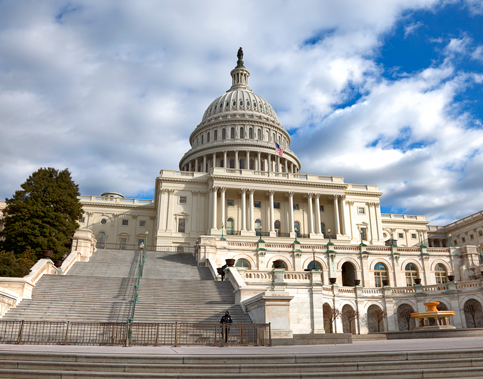
washigton dc capitol building

Some liberals on the other side of the political spectrum believe the government should play a vital role in the lives of the people, from cradle to grave. They believe the lowly masses cannot take care of themselves.  For Democrats, government must step in and take up the role of caretaker.  As Nancy Pelosi said in 2011:  “I view my work in politics as an extension of my role as a mom.”[i]  This progressive viewpoint is known as government paternalism, and has been defined as “a policy or practice of treating or governing people in a fatherly manner, especially by providing for their needs without giving them rights or responsibilities.”[ii] Continue reading “Paternalism’s Foe: Grover Cleveland”

Teaching Civic Virtue


Today, we have in our society a crisis.  I’m not talking about the debt crisis, though that certainly qualifies, but a crisis in our very attitudes as Americans.  We used to believe in ourselves and in our founding principles but those values have slowly eroded to the point of nonexistence.

George Washington reminded us in his famous Farewell Address in 1796 that “Of all the dispositions and habits which lead to political prosperity, religion and morality are indispensable supports.”

Washington was right but sadly, we seem to have lost the battle over our local schools, particularly the right to teach what we want, especially the Ten Commandments.  We can’t even post them in the halls without out the threat of a lawsuit and a court rebuke.  Though we can fight to win them back, the process will take years, if not decades. Continue reading “Teaching Civic Virtue”

The Evolving View of Government


“The lesson should constantly be enforced,” wrote President Grover Cleveland in 1887, “that though the people support the Government the Government should not support the people.”

Cleveland made this pronouncement as he vetoed the Texas Seed Bill, a small $10,000 appropriation aimed at providing assistance to drought-stricken farmers in the Lone Star State.

The Constitution did not allow the federal government to spend money on public charity, the Jeffersonian Cleveland believed, and if Washington started down the road of paternalism, where would it end?

Such strict construction of the Constitution, a source of pride for true conservatives, drives leftwing scholars and pundits crazy, causing them to denigrate any President who had the temerity to believe in such “outdated” and “old fashioned” thinking.

For Jack Beatty, a senior editor of The Atlantic Monthly, an analyst on NPR, and author of The Age of Betrayal:  The Triumph of Money in America, 1865-1900, such views raise important questions:

“Why did the people support a government that on principle refused to support them, that wouldn’t spend pennies to save farmers from ruin?” he asked.  “Why return to office politicians like Cleveland, who vetoed three times as many bills in one term as all his predecessors combined?  What had gone wrong with the Republican experiment in positive government for the country to settle for negative government?”

Beatty believes, not in the conservative principles of Thomas Jefferson, but those of the more liberal Abraham Lincoln, a philosophy that is an antithesis to Cleveland’s.  Lincoln had broken the old Jeffersonian mold and provided a new view of the role of government in the every day lives of the people.  He once said, “The legitimate object of government is to do for a community of people, whatever they need to have done, but can not do, at all, or can not so well do, for themselves – in their separate, and individual capacities.”

Which begs another question:  Who decides what the people can or cannot do for themselves?  Or if they can do it good enough to suit the government?

Ultimately the people rejected the Lincoln line of thinking in favor of conservatism, at least for a while.  Nineteenth century Americans, and their early 20th century brethren, did not believe in an active, or positive, government.  The American Revolution, contrary to Beatty’s thinking, was not about creating an energetic government.  Our forebears held true to the Jeffersonian admonition, “That government is best which governs least.”

The Jeffersonian view carried over into the early 20th century.

In 1927, the Mississippi River overflowed its banks in one of the worst floods in the nation’s history.  Herbert Hoover, a great engineer and Commerce Secretary under President Calvin Coolidge, traveled to the South to offer his assistance.  But unlike the situation in New Orleans eight decades later with Hurricane Katrina, local people told Hoover to leave.  They did not trust the federal government and did not want out-of-town bureaucrats sticking their noses in local affairs.

People in those days had honor and pride, believing they could handle their own problems.  There were no shouts of “help” from stranded citizens who suffered from the severe flooding, as we saw around the Superdome.  They understood that with government aid also came government rules, regulation, oversight, and control.  Once the government got in, it might be next to impossible to get them out.

It was not until the horrible period of the Great Depression in the 1930s, when the economy nearly imploded, that Americans, for the first time, began to look to government for every day things.  FDR used massive government aid to help people affected by the depression, the first direct assistance in U.S. history.

From that point on, a dependence on government grew within the American people and has continued to increase.

Americans have evolved from a freedom-loving people that looked to themselves for their own livelihood to believing that government has a positive role to play in society.

The Constitution, earlier Americans correctly understood, does not contain any language that allows the government to spend money for public assistance.  It was always held to be unconstitutional to tax one group of citizens and give it to another.

But all that has changed now and the situation is much worse.  It has recently been reported that government handouts equal 35 percent of all wages in the United States.  In 1960 the figure was just 10 percent.  Forty-four million Americans are now on food stamps and fifty million receive Medicaid.  Today, fifty-eight percent of all government spending is on entitlement programs.

But what is even scarier is that it seems as if a majority of Americans believe the federal government should have at least some positive role in the lives of the people.  Many believe the government should take care of its citizens from cradle to grave.  Early Americans would have thought such thinking downright dangerous.

President Cleveland, in the late 19th century, could foresee a potential threat to limited government if Washington got in the handout business.  He took the opportunity in his second inaugural address to remind the people that the “lessons of paternalism ought to be unlearned,” he said.  “Every thoughtful American must realize the importance of checking at its beginning any tendency in public or private station to regard frugality and economy as virtues which we may safely outgrow. The toleration of this idea results in the waste of the people’s money by their chosen servants and encourages prodigality and extravagance in the home life of our countrymen.”

In our time of near-bankruptcy, America would do well to elect a president in the mold of Cleveland, one who will stop the wealth re-distribution scheme in full swing in Washington and return our nation to the ideals and values that made it great.


Judicial Tyranny in Arizona


Just twelve hours before a new immigration act in Arizona was set to take effect, U.S. District Court Judge Susan Bolton, appointed by Bill Clinton, issued a temporary injunction against the most significant portions of the law.

The teeth of the law includes provisions that make it mandatory for immigrants to carry their papers and identification at all times and require police officers to check the status of immigrants while enforcing other laws.  Illegals, or so-called “undocumented workers,” are also prohibited from soliciting employment under the new law.

Judge Bolton halted enforcement of these provisions until the courts have resolved the legal issues surrounding the law.  Her ruling, in effect, has rendered the act of no force.

But the ball is now in the court of Governor Jan Brewer and the State of Arizona.  Will they submit to the dictates of a politically-appointed judge?  Or will they defy the courts and continue to enforce their own laws within their own borders?

Judge Bolton is overseeing seven lawsuits that have been filed against the law, including one by Attorney General Eric Holder.  The State of Arizona had filed a motion with the federal court to have the lawsuits thrown out, but now the judge has sided with the federal government.

Should we be surprised?

In recent decades, the states have chosen to fight the federal government in federal court.  This is the wrong move and an unwinnable situation.  It is not a proper check on the power of Washington.  The federal government has proven time and again that it will never check itself.

Furthermore, when suits are filed by the states against Washington, the feds are allowed to preside over its own case.  This would be like Gulf Coast fishermen suing British Petroleum for damages, while BP’s CEO acts as the final arbitrator.  We all know how that one would come out. 

And as a result, Washington has grown all-powerful.  As Thomas Jefferson wrote to a friend in 1825, “It is but too evident, that the three ruling branches…are in combination to strip their colleagues, the State authorities, of the powers reserved by them, and to exercise themselves all functions foreign and domestic.”  How right he was!

The federal government from day one has bristled with hostility anytime a state encroaches on its constitutional authority, as it alleges with the Arizona law, but Washington has encroached on the rights of the states almost since the inception of the Constitution itself, for which it has shown little remorse.

“By enforcing this statute,” Judge Bolton wrote in her ruling, “Arizona would impose a ‘distinct, unusual and extraordinary’ burden on legal resident aliens that only the federal government has the authority to impose.”

But Washington has not imposed its authority in enforcing U.S. immigration law, and Arizona is living in a nightmare as a result.  Phoenix is now the kidnapping capital of the nation, and the crime and violence on the border is horrendous.  The federal government has failed miserably in securing the border but now is preventing a sovereign state from acting in its own best interest to protect its citizens.

Arizona should defy this ruling and go ahead with the enforcement of its law, which simply codifies existing federal law. 

Governor Brewer certainly has some fight in her.  “This fight is far from over,” she said after the ruling.  “In fact, it is just the beginning, and at the end of what is certain to be a long legal struggle, Arizona will prevail in its right to protect our citizens.” 

“Courts have no law enforcement powers; that is the prerogative of the executive alone,” wrote Andrew Jackson.  But rather than vow to appeal the decision, Governor Brewer should take a page from Old Hickory and announce that Judge Bolton has made her decision, now let her enforce it!  Arizona is moving forward!

Chicago Equals Insanity


Albert Einstein once defined insanity as “doing the same thing over and over again and expecting different results.”  Chicago’s gun laws fit Einstein’s definition perfectly.  In an effort to combat violent crime, Windy City liberals have succeeded in making law-abiding citizens defenseless against thugs who do not obey any laws.  But rather than change their strategy, Chicago’s leaders try more of the same.

Consider the hell on earth that is present-day Chicago.

In 2008 there were 511 murders, including 125 during the summer months; in 2009 the number was 453; and from January to May 2010, 164 homicides have been committed.  With violence this bad it has been suggested that the National Guard may have to be called out to quell the viciousness Chicago’s citizens have unleashed on one another.

However, the Supreme Court recently struck down Chicago’s 28 year-old gun ban as unconstitutional but the city wasted little time by imposing more draconian gun restrictions just days later.  The Chicago City Council passed a new ordinance that allows only one assembled and operable firearm in a household.  Any remaining weapons must be locked away while also decreeing that all firearms must be kept inside the house and can not be taken outside, onto the porch or in the garage.

In a press conference to announce and defend the new proposals, Mayor Richard Daley said of the new laws:  “It responsibly and reasonably balances previous Court rulings on 2nd Amendment Rights with our determination to protect our residents from violence and keep them safe.”

In addition, Mayor Daley cited, not the out-of-control violence in his city, but several strange facts on the supposed danger of firearms in the home:

  • A gun in the home increases the risk of unintentional firearm injury, suicide and homicide.
  • The danger of having a gun in the home is especially serious for children and adolescents. In states with more guns, young people are at higher risk for accidental gun injuries, suicide and homicide.
  • Women in states with higher levels of household firearm ownership are more likely to be murdered.
  • A long line of studies show that gun availability is a risk factor for suicide. Firearms in the home are associated with significantly higher rates of suicide, including among young people.

The mayor also expressed “great concern over the danger faced by law enforcement and emergency ‘first-responders’ when they enter a home in which there are guns.”

So Mayor Daley is not particularly concerned about the warzone his city has become. 

“As long as I’m mayor, we will never give up or give in to the gun violence that continues to threaten every part of our nation, including Chicago,” Daley said.  “I believe that enacting a new handgun law is the responsible step for us to take and the right thing to do. Without it, I fear for that there will be greater violence on our streets and in our homes.”

It is understandable that people have an inordinate fear of guns.  We live in a gun culture.  But firearms are the surest way for citizens to protect themselves in a society that is becoming more violent every day. 

A woman in Tulsa, Oklahoma recently defended herself from two “well known” thugs who broke into her home armed with knives, threatening to rob and sexually assault her.  She shot them both, killing one and critically injuring the other.  Had she not possessed a firearm, she would have been robbed, raped and God knows what else.  Officials in Tulsa wisely decided to file murder charges but against the wounded attacker in the hospital.  A state law allows such a charge if that person commits a felony and someone dies in the process.

The two assailants in Tulsa had no guns, but carried out the crime with other weapons.  Criminals are the problem, not decent, law-abiding citizens, and certainly not firearms. 

Oklahoma is demonstrating sanity by allowing citizens to defend themselves, without fear of prosecution, and going after thugs who prey on society.

If there is one indisputable fact about liberalism it is this: if carried to its fullest extent, it will always accomplish the exact opposite of its intended purpose.

Disarming law-abiding citizens will only lead to more violent crime, not less.  Chicago is definitive proof of that fact.

In times past, namely the Old West, guns were freely carried by law-abiding citizens.  But sadly, much of our perception of history comes from television and the movies.  The words “old west” or “wild west” would probably conjure up an image from a film, most likely a shootout scene with guns blazing.  Movies portrayed the era much differently than reality, however.

It might be surprising to many that there were very few murders, and other violent crimes, in the Old West.  Scholars who have studied the period have concluded that violence was quite low.  Dodge City, of Wyatt Earp fame, had its deadliest year in 1878, when just five murders took place.  One historians’ study found that there were only 45 murders in the five major cattle towns in the Wild West from 1870 until 1885, an average of just three a year.

Why was violence so low?  The answer is obvious.  It was never a good idea to violently confront someone with a six-shooter strapped to each hip.

But in a blatant form of hypocrisy, politicians have armed guards to protect them each and every day, then vote to strip citizens of their rights to own and possess firearms for defense.

The best idea to ensure that politicians look out after the personal well-being of the nation’s citizens comes from the late Harry Browne, two-time Libertarian Party presidential nominee, who once said that if he were elected president he would immediately order the disarming of Capitol police officers, who would remain unarmed until Congress repealed all federal laws that restrict a citizen’s right to keep and bear arms.  If citizens can not protect themselves, he said, then politicians had no right to such protection.

Mayor Daley, President Obama, and every leader in our cities, our states, and our nation’s capital should have to face the same fears the rest of us face.  Maybe then the insanity would end and laws that actually work to protect the citizenry would prevail.

The Mystifying Logic of the Supreme Court


In the past couple of weeks, in three major cases released before adjournment, the United States Supreme Court has left us all wondering just what passes for logic in the hallowed chambers of the nation’s highest judicial chamber. 

This honorable Court has ruled, in recent days, that enemy combatants, who are not U.S. citizens, should be granted access to our court system and provided the same rights under our Constitution enjoyed by American citizens; that the State of Louisiana cannot execute child rapists; and, in what should have been an open-and-shut case, rightfully struck down a Washington, D.C. ban on handguns but only by the slimmest margin possible, 5 to 4.

In the first decision, Boumediene v. Bush, the Court ruled, outrageously, that Guantanamo detainees, that is those persons that U.S. military forces have captured on foreign battlefields and who are engaged in combat against us, have a right to the same due process rights, found in the Fifth Amendment, as U.S. citizens.  In other words, they can use civilian courts rather than the military tribunals, which have always been used throughout U.S. military history.

The Court in this case reversed the decision of the D.C. Court of Appeals, which rightfully concluded that constitutional rights do not apply to aliens outside the United States.

Giving such rights to known terrorists borders on insanity.  Once inside a civilian court, with a defense lawyer in tow, they can demand the right of discovery, gaining valuable intelligence information.  This happened when the perpetrators of the 1993 World Trade Center bombing were caught and put on trial.  Not only is the turning over of information damaging, and potentially deadly, terrorists can also learn how we are gaining our intelligence, which is infinitely more harmful to our national security.

And can you not see how illegal aliens might be able to use this ruling to their benefit?

In Kennedy v. Louisiana, the decision by the Supreme Court to strike down a law passed by the State of Louisiana to execute child rapists is yet another example of the arrogance and misguided logic in Washington.  Here again we see the Supreme Court reaching down into a sovereign State and overturning a law passed by its duly elected representatives.  This practice has been going on since the days of John Marshall, and is clearly outside the bounds of the strict parameters of Article III of the Constitution.

Governor Bobby Jindal called the ruling “an affront to the people of Louisiana.”

And again the chosen method is the Bill of Rights, as the Court often enjoys applying those restrictions to the individual States.  The Left believes that the Fourteen Amendment fastens the First Amendment restrictions upon the States.

But this is not what our Founders desired.

In 1866 Congress passed the Fourteenth Amendment to the Constitution.  Section 1 declares: 

“All persons born or naturalized in the United States, and subject to the jurisdiction thereof, are citizens of the United States and of the State wherein they reside. No State shall make or enforce any law which shall abridge the privileges or immunities of citizens of the United States; nor shall any State deprive any person of life, liberty, or property, without due process of law; nor deny to any person within its jurisdiction the equal protection of the laws.”

Two years later, on July 9, 1868, the requisite number of States had ratified it (although some of them where still out of the Union at the time, which makes for an interesting argument against its legality). 

However, nothing in that amendment even suggests that the Bill of Rights was being applied to the individual States.  It does use the same language as the Fifth Amendment, applying those protection upon the States, but nothing more.

It was never the intent of the Founders to apply the Bill of Rights to the States.  Those ten amendments were seen very clearly at the time as a means of binding the federal government. 

In 1875, seven years after helping to pass the Fourteenth Amendment, Congressman James G. Blaine of Maine, who served in the U.S. House, including three terms as Speaker, in the U.S. Senate, as Secretary of State twice, and was the GOP nominee for president in 1884, proposed an amendment that would apply part of the First Amendment to the States.  The “Blaine Amendment” concerned the use of public funds for religious schools, a issue still disputed today.  His amendment stated as follows:

“No State shall make any law respecting an establishment of religion, or prohibiting the free exercise thereof; and no money raised by taxation in any State for the support of public schools, or derived from any public fund therefor, nor any public lands devoted thereto, shall ever be under the control of any religious sect; nor shall any money so raised or lands so devoted be divided between religious sects or denominations.”

Now the question is this, if the Fourteenth Amendment applied the Bill of Rights to the States, why would Blaine have needed such an amendment?  Because the Fourteenth Amendment did not impose the Bill of Rights upon the States.  But it has since been used by the Court to impose restrictions upon the States and upon the people.

One year later, however, the Court was presented an opportunity to rule on this very subject.  In United States v. Cruikshank (1876) the Court held, by a vote of 9 to 0, that the Bill of Rights does NOT apply to the States.  The case involved civil rights but it clearly had wide-ranging implications, as noted in Chief Justice Morrison Waite’s majority opinion.  He stated, in regard to guns, that the Second Amendment declares that just such a right “shall not be infringed, but this, as has been seen, means no more than that it shall not be infringed by Congress.  This is one of the amendments that has no other effect than to restrict the powers of the national government….”  Simply put, Congress, or any part of the federal government, cannot infringe on the liberties protected by the Bill of Rights.

As for the Washington, D.C. gun ban case, District of Columbia v. Heller, the Supreme Court does exercise jurisdiction here because Congress, under Article I Section 8 of the Constitution, is given authority over the seat of the national government. 

The Court struck down D.C.’s long-standing ban on hand guns, in place since 1976, as an unconstitutional violation of the Second Amendment, which the Court interpreted to be an individual right.  But why would this case be so close?  Four justices, the liberal members of the Court, took the opposite side in what should have been a slam-dunk case.  But this is judicial activism at its best – if they don’t like the Constitution they just simply rule how they would like it to be.

Over the weekend I watched one of my favorite movies, Clint Eastwood’s Unforgiven, in which several scenes brought me back to the Heller case.  If you recall the film, Gene Hackman’s character, Sheriff Little Bill Daggett, oversaw a gun ban in his small town of Big Whiskey, Wyoming.  This left the townspeople, and any visitors who might enter, totally at the mercy of the sheriff’s department, i.e. the government.  Without any weapons to defend themselves against an over-bearing government, the people simply had to endure Little Bill’s vicious beatings, three of which are showcased during the film. 

The Founding Fathers had just such a scene in mind when they envisioned the Second Amendment, the “right of the people to keep and bear arms” in order to defend themselves against an oppressive government, on any level.  The idea of a government taking away the people’s arms smacked of tyranny in its worst form.  For if a people were disarmed, government would be free to do as it wished.  This should be unthinkable to any freedom-loving person.

The Second Amendment simply states:  “A well regulated Militia being necessary to the security of a free State, the right of the People to keep and bear arms, shall not be infringed.”  It must be noted that a militia in the 18th century was not like today’s national guard, but a unit consisting of the local people, who were armed, and could repel invasions, like the minutemen at Lexington and Concord.  George Mason, a “Father of the Bill of Rights” along with James Madison,  once said of militias, “I ask, sir, what is the militia?  It is the whole people, except for a few public officials.”

But the amendment also protected one’s right of self-defense and the right to dispose of a hostile government.  The evidence for this is clear in the historical record.  Without the Second Amendment, the rest of our protected rights are meaningless.

The Left, predictably, has already kicked off a full-scale assault on the ruling and on gun rights in general.  The Chicago Tribune editorialized on Friday, June 27th, that not only were the Founding Fathers complete idiots but we should, as the title states, “Repeal the 2nd Amendment.”

We must be on-guard against these kinds of brazen attacks.  Although they may be unthinkable, the Left has always been masters of chipping away at our rights and liberties until they are no more. 

But we cannot, as true conservatives, put too much faith in the Supreme Court as the final judge of our liberties.  This was not the intent of the Founders and it should not be our platform either.  For the logic of five robed members of the Supreme Court can trample our rights as surely as a despot.

Politics vs. Statesmanship in the Immigration Debate


The current national debate over immigration reform has caused me to think deeply about what is actually happening in our country. What we are seeing right before our eyes is a bunch of politicians defying the clear will of the vast majority of the American people. Poll after poll clearly show that upwards of 75 to 80 percent of the people want illegal immigration halted in its tracks and restrictions placed on legal immigration. Yet most of our illustrious leaders in Washington are doing their level best to disobey their masters.

This issue, as much as any other, will demonstrate to you, the American citizen, the true character of your elected representatives. Is he or she a statesman or just another politician? And believe me, there is a vast difference between the two.

Today we like to throw the label “Statesman” around yet not really understand the true definition of it. You probably recall many times seeing one of our older members of Congress on television and hearing the commentator refer to him as an “elder statesman.” That may or may not be true. It all depends on who he is and what he has stood for over his career. So let me bring this to the forefront and clear the air.

The textbook definition of a statesman is partially true, defining it as one who practices the art of government. I hate this definition because under it Adolf Hitler was a statesman and none of us would agree with that. But the second part of the definition is “one who governs wisely.” Now this will tell us much about today’s current debate.

Is it wise to allow millions of illegal aliens to cross our southern border every year with no serious effort to stop it? All we have heard since that fateful morning in September over four years ago is that the world changed, that we must adjust our policies to it. And we have done so, launching unprecedented pre-emptive wars, engaging in massive nation-building efforts, and seeking to spread democracy around the globe, all at a cost of countless billions of taxpayer dollars and thousands of lives. Yet we have left our southern border with Mexico wide-open, and at a time when al-Qaeda and Osama bin Laden have threatened new attacks on our homeland, possibly with weapons of mass destruction. This is far from wise.

But the national security reason is not the only one. Economics is also an equally important factor. Just this week we heard President Bush, speaking from Cancun, Mexico, remind us that these immigrants, seeking work in the United States, will do the jobs American won’t do. Now that is an out-and-out, bald-faced lie! And it has been spewed from Washington for years. The truth is that Americans won’t work for four or five dollars an hour, and illegal immigrants (and legal ones for that matter) will. This is the main reason the Republican Party has allowed such as flood of illegals to cross over into our country, in order to pay back massive campaign contributions from corporations and big business. The GOP gets campaign cash, businesses get cheap labor. And what does the American worker get – the shaft! Massive floods of cheap labor will, and is, driving wages in this nation downward. More labor means lower wages. It’s simple economics.

For Democrats the issue is a little different, although they are aiding businesses as well. Don’t ever think they are not. But mainly they want to expand a voting block in which they will always get the vast majority of the votes. Republicans were overjoyed when Bush gained 44 percent of the Hispanic vote in 2004. Well yahoo! That will not cut it, not ever. Don’t these fools realize that if Mexicans continue to pour into this nation at that rate, gain amnesty and citizenship (or just vote as illegals the way many Democrats want it) that the days of a Republican majority are over forever? Our nation, the nation of our fathers, will be lost. Our culture will be changed and it can never be regained. This is my biggest fear. I’m beginning to think the late Sam Francis was right. Maybe they are the Stupid Party!

Now back to our definitions. Those who support and promote this crazy immigration policy are not statesmen but politicians. They are worried only with now, today, the present, and have no thought for tomorrow. Oh we hear every campaign season how they are “fighting for the children” but we should look at their actions, not their words. As our Lord told us in Matthew 7:15, “By their fruit you will know them.” Don’t believe what comes out of a politician’s mouth, but look at what they actually do to judge their character. Most of our representatives in Congress only care about staying in office and their power. They are not concerned with what happens to this nation in the future. A statesman, on the other hand is wise and takes a long range view of situations, all the while standing on principle. A politician thinks about today but a statesman thinks about tomorrow, or more accurately, the next generation. Think about it my fellow citizens – what will our great nation be like in 20 or 25 years of unrestricted immigration? I can tell you – you won’t recognize it! A politician will do anything, and say anything, to get elected. We hear it all the time, yet a statesman will stand on his principles and if he is defeated he will retire to his home happily. The trappings of power do not affect him. We need men of this caliber in Washington today.

One of America’s greatest statesmen and political thinkers, John C. Calhoun, wrote and spoke often about the differences between a politician and a statesman. To Alexander Hamilton, Jr., he wrote in 1830: “The distinction between the statesman and the politician is broad and well defined. The former is an ornament and blessing to his country, but the latter a pest. No one is worthy of the public confidence, who does not place himself on principle and services as the means of advancement. Intrigue and cunning will, I trust, prove as feeble as they are detestable.” So where does your elected representative stand?

The Coming Supreme Court Fight


Many conservatives were understandably outraged at President Bush’s recent choice of White House counsel Harriet Miers as his nominee to the United States Supreme Court. Bush promised a reshaping of the Court with justices in the mold of Scalia and Thomas but what we have been given are two stealth nominees, one with a very thin paper trail and one with no evidence at all of where she stands on the issues except the words of her mouth, which is generally suspect in Washington. With many outstanding, well-qualified judges with long track records of strict constuctionism at the appellate level to choose from, the conservative movement has been basely betrayed with this latest pick, to say the least.

The upcoming battle will be a difficult one for sure but conservatives in Congress should make a valiant effort and stand on principle here, even if it is a futile cause. Defeating a Miers nomination would send a strong message to President Bush from congressional conservatives. However, should she be confirmed and turn the way of David Souter, all is not lost here. Conservatives have plenty of firepower in Congress and in the states that should be used to put the Court back in its proper constitutional role.

For starters, my fellow conservatives should stop paying lip service to liberal notions of an all-powerful court system. Conservatives boast about the power of the legislative branch and the sway that it has over the federal judiciary but yet work themselves into a panicked frenzy when considering nominees, careful to make sure strict constructionist conservatives are chosen so the decisions will come out like we want them to. This is important and must be done but, irregardless of who is picked, Congress can steer the courts any way it chooses on most issues.

Our brilliant Founders did not intend for the Supreme Court to be nearly as powerful as it has become and made sure that the representatives of the people and the states had power over the unelected judiciary and the sole power to make laws. Alexander Hamilton admitted this, for the most part, in Federalist #78: “The judiciary…has no influence over the sword or the purse; no direction either of the strength or of the wealth of the society, and can take no active resolution whatever.”

Courts function merely to administer the law, not to make it. The job of creating law was given to the legislature, in Article I, Section 1 of the Constitution: “All legislative Powers herein granted shall be vested in a Congress of the United States, which shall consist of a Senate and a House of Representatives.” It does not mention the Supreme Court.

In fact, if you were to examine an original map of Washington, D.C., as the planners laid out the proposed capital city, you will quickly discover that there was never even a plan for a building to house the Court. This was no accident. The Supreme Court met in the basement of the Capitol building for decades. In fact, the current building in which our infamous Court holds session was constructed during the 1930’s as part of the New Deal. It doesn’t sound like a co-equal branch of government to be shoved in the basement.

Congress has enormous power over the federal courts though they do lack the will to use it. For one, Congress sets the number of justices on the Supreme Court, not the Constitution. The original Court, in 1789, contained only six justices. Eventually that number was raised to seven, then later to its current limit of nine. If you recall, FDR sought to raise the number of seats to fifteen but was rebuffed. Yet Congress is under no constitutional obligation to fill the seat of any retiring or deceased justice. It could simply leave it empty if it so chooses and abolish it. Congress also created ALL appellate and district courts. These courts could be abolished just as easily. And though a judge’s salary can not be touched, there is nothing that protects his office and funds needed to operate it.

In addition, Congress can impeach and remove judges and justices that it views are not acting in “good behavior.” The Founders, in using that phrase, did not mean that a judge in “good behavior” was not a criminal but one who was not fulfilling his oath of office. Using foreign law to make decisions and legislating from the bench are as impeachable as corruption and bribery. However, in today’s current political makeup, gaining a two-thirds majority in the Senate would be next to impossible.

If these powers are not practical today, Congress does possess the power to curb the jurisdiction of the federal judiciary and limit what cases may be decided by it with a simple majority vote. The Supreme Court is given original jurisdiction by the Constitution but in all other cases it has appellate jurisdiction, “with such Exceptions, and under such Regulations, as Congress shall make.” Congress can pass legislation and then simply attach an amendment that states that the federal courts have no appellate jurisdiction in this matter. Case closed.

It has been erroneously suggested recently by many conservatives that Congress should pass a constitutional amendment whereby a Supreme Court decision could be overturned by a two-thirds vote of each house. This is ignorance and stupidity! Congress already possesses amble powers to overturn any and all Supreme Court decisions. There just seems to be a lack of political will to challenge the courts.

But what of the Supreme Court’s authority to interpret the Constitution and strike down laws that conflict with it? Alexander Hamilton, author of Federalist # 78 – 83, which discusses the federal judiciary, felt that the courts had the power to strike down congressional legislation that it decided was unconstitutional. This is not really in dispute today. Yet, as we have seen, Congress can take appropriate action on those matters, should it decide to do so. And Congress, throughout our history, has used legislation to overturn rulings of the Supreme Court.

Those advocating strong judicial powers, however, point to a phrase in the Constitution, in Article III, Section 2, which states that the judicial power shall extend to all cases “arising under this Constitution” as proof that the Supreme Court may take and rule on any case which it pleases, for almost anything can be construed to be a constitutional issue. Yet this is not so. The Constitution does not mention abortion, education, the environment, public assistance, or any of a number of issues taken up by the federal courts.

Along with Congress, the president has his obligation to the Constitution as well. President Thomas Jefferson, who fought John Marshall during the Court’s initial grab for power, did not believe that the judiciary was the all-powerful deciding factor in matters of legislation and constitutional interpretation. “The question whether the judges are invested with exclusive authority to decide on the constitutionality of a law has been heretofore a subject of consideration with me in the exercise of official duties. Certainly there is not a word in the Constitution which has given that power to them more than to the Executive or Legislative branches.” Here Jefferson admits a key factor in deciding just what the Constitution means. Why does the president and Congress not have as much right as the judiciary to decide whether a federal law stands up to constitutional scrutiny? The answer is obvious – they do!

The Executive Branch, it is often said, must enforce all Supreme Court decisions, yet no word in the Constitution gives the president that power. The chief executive must “take Care that the Laws be faithfully executed.” But as we have seen, a Court decision is NOT a law! Only Congress can pass laws. In fact, past presidents have simply ignored many Court orders. President Jefferson ignored a Supreme Court order to deliver a commission to William Marbury and President Andrew Jackson actually defied John Marshall’s decision in the Cherokee cases and forcefully removed Indian tribes that the Court had declared were a “domestic, dependent nation.” Lincoln ignored Supreme Court Chief Justice Roger B. Taney who ruled that the president had exceeded his power. He even went so far as to write out an arrest warrant for Taney’s confinement! We might not want to go quite as far as Mr. Lincoln but it does demonstrate the early attitudes toward the Supreme Court.

The federal courts have also been in the business of striking down legislation passed in the individual states, a power assumed since the end of the Civil War, when states’ rights and the concept of state sovereignty were destroyed. However, there is nothing in the Constitution that even suggests the federal judiciary can reach down and overturn a law passed in Mississippi, Texas, New York, or any other state. Hamilton outlined federal judicial power in Federalist # 80 and an internal matter within a single state jurisdiction is not included. The federal courts have jurisdiction over cases involving two states in dispute or any other cross-state controversy, such as a citizen of one state suing someone in another, but individual state matters are off limits.

Our state governments, which Jefferson referred to as “the surest bulwarks against anti-republican tendencies” is a key battleground for confronting and regaining control of the federal judiciary. Simply put, we need defiance at the state level. It is high time some courageous governors stood up and declared that no longer will we abide by the rulings of federal courts that interfere in the internal matters of the state. Supreme Court decisions in the past have gone so far as to order states to raise taxes to implement federal desegregation plans and turn loose violent criminals from state penitentiaries to ease overcrowding. State officials that comply with such rulings are cowards and do not deserve to represent the people! I want to see a governor somewhere point his finger at the Court and declare, just as Andrew Jackson did to John Marshall: You have made your ruling, now YOU enforce it!

Conservatives had high hopes to build a strong, strict constructionist Supreme Court with Bush’s two terms but that dream has seemingly slipped from our grasp, probably never to return. But don’t panic my friends! Even if we can’t stop the Miers nomination, we can continue to build and maintain strong, determined conservative leaders in Congress and on the state level.  Then the Supreme Court can have no power over us and will never again decide the issues rightfully belonging to the people!

Bush and the Presidential Veto


To ensure proper checks and balances for the executive branch of government, our Founding Fathers wisely gave the president the power to veto legislation passed by Congress. This gave the chief executive enormous power over the legislative branch, though a veto could be overridden with a vote of two-thirds of the members of both houses of Congress, but a lot easier said than done. However, President Bush has yet to take advantage of this and has not vetoed one single piece of legislation in more than five years of his presidency, even though he has had many opportunities to do so.

Now I’m sure our president, with two degrees from Ivy League schools, knows that he possesses such authority under the Constitution. But why he hasn’t utilized it is anybody’s guess. My own thought is that he is still trying to live up to a campaign pledge he made in 2000, which is to bring a new tone to Washington and stop the gridlock and nasty political fighting. Vetoes would only complicate matters. This is in addition to the fact that his party controls Congress and to veto a bill could be viewed as a split in the ranks. But this is not the action of a man of principle, only one of politics. And what have we reaped from his policy? The Patriot Act, McCain-Feingold, a prescription drug benefit for Medicare, and numerous, massive spending bills full of pork, like the recent highway bill, that have given us the largest deficits in our history!

But contrary to popular belief, Bush is not alone in his veto-free presidency. In fact it has happened numerous times in our past, with seven presidents never wielding it. President Thomas Jefferson did not veto a single bill in eight full years as president, and this followed a four year term by John Adams, who also did not veto a single bill. And for the record, President Washington only vetoed two bills in his eight years at the helm. This was a different era, however. Then, presidents believed that only those laws thought to be unconstitutional should be rejected, which made the president, in the eyes of our Founders, the watchman over the Constitution rather than the Supreme Court.

A great example occurred on March 3, 1817, when President James Madison vetoed the Bonus Bill, stating in his veto message to Congress that the “legislative powers vested in Congress are specified and enumerated in the eighth section of the first article of the Constitution, and it does not appear that the power proposed to be exercised by the bill is among the enumerated powers, or that it falls by any just interpretation within the power to make laws necessary and proper for carrying into execution those or other powers vested by the Constitution in the Government of the United States.” There are numerous examples of this throughout our early history, as presidents regarded it as their duty to guard the Constitution.

Congress also did not spend nearly the same amount of time in session during the early years of the republic as it does now, so fewer laws were passed, not to mention the fact that the federal government stayed within strict constitutional boundaries and did not venture off into areas reserved to the individual states. So presidents did not have nearly as many opportunities to veto legislation.

Beginning with Andrew Jackson, however, the era of limited presidential vetoes came to a screeching halt. President Jackson believed he should veto bills that he simply did not like, whether they were constitutional or not. He issued 12 such rejections in two terms as chief executive, compared to only 10 in the previous 40 years! Thus a new era began to take shape, giving the president much more power and authority.

Democratic heroes Grover Cleveland and Franklin D. Roosevelt hold the record for most vetoes, with 584 and 635 respectively. Amazingly, FDR, working with a Democratic Congress, had only 9 overridden in more than 12 years as president. And Cleveland issued 414 of his in his first term alone! In our modern era, usage of the veto pen has slowed a bit but has been used with great effectiveness. Nixon issued 43 vetoes, Ford had 66, Carter 31, Reagan 78, Bush, Sr. 44, and Clinton issued 37.

President Bush needs to join the crowd and begin to use his presidential power more decisively. He claims to want to slow down spending in his second term and use of the presidential veto is the surest and most effective way to do it, as it seems Congress will not. With our budget deficit soaring to new heights, something has got to give.

Embattled former House Majority Leader Tom Delay recently concluded, to the amazement of many true conservatives, that all the fat had been trimmed from the federal budget and to cut further would slice muscle and bone. Whose budget did he examine? Certainly not Washington’s! And with the prospect of spending hundreds of billions of additional dollars to clean up after Hurricane Katrina, our economic future looks bleak. President Bush should finally wield the veto pen and begin to make serious cuts in the federal budget or risk a serious split in GOP ranks, a prospect that could have disastrous consequences in 2006 and 2008.

Blog at WordPress.com.

Up ↑